Future
  • Login
  • Home
  • News
  • Sport
  • Reel
  • Worklife
  • Travel
  • Future
  • Culture
  • More
    • Music
Sunday, December 7, 2025

FUTURE

  • Home
  • Future Planet
  • 100 Year Life
  • Best of Future
  • Japan 2020
  • Latest
No Result
View All Result
  • Home
  • Future Planet
  • 100 Year Life
  • Best of Future
  • Japan 2020
  • Latest
No Result
View All Result
Future
No Result
View All Result
Home Future Planet

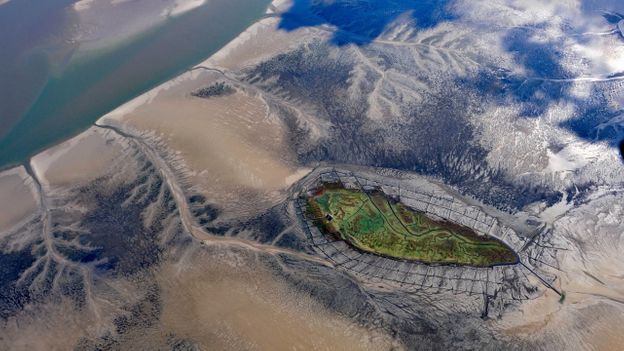
The islands that protect Germany from the North Sea

February 19, 2021
in Future Planet
163 1
0
305
SHARES
2.3k
VIEWS
Share on FacebookShare on Twitter

Related articles

How Hong Kong protects people from dangerous landslides

The mystery of Mexico’s vanishing stream oaks


“I’m in favour of [targeted flooding] and think we on the Halligen should definitely support it,” says Katja Just, the mayor of Hooge, which is relatively rarely flooded because of its dyke. “But of course there are those who say, no, no, no way, that would lengthen land under, and then we can’t get away.” She believes, however, that the inconvenience is worth it, if it means preserving Hooge for future generations.

Even if they were eventually implemented on all the Halligen, the targeted floods will only be one element of a wide-reaching and costly plan to adapt the islands to climate change.

“If we want to hold on to the Halligen, there are several basic conditions,” says Hans-Ulrich Rösner, the director of the WWF’s Wadden Sea Office in the German town of Husum. “First, the mounds have to be raised, so people can live there. Second, the land has to grow, and that’s only possible through land under. Third, the edges have to be protected from erosion.” That last step has already been implemented for some decades, by fortifying the Halligen with stone edges. As a final point, Rösner emphasises that the surrounding Wadden Sea intertidal ecosystem also has to be preserved, because the Halligen ultimately can’t exist without it.

All these efforts, Rösner says, are going to be futile unless countries adhere to the Paris Agreement, an international treaty on climate change that aims to limit global warming: “Without well-functioning global climate protection, nothing can be saved here.”

Climate mounds

The first of Rösner’s recommendations, raising the mounds, is already underway. The state of Schleswig-Holstein is aiming to gradually convert the mounds on the Halligen into so-called “Klimawarften”, or “climate mounds”, which will resist the rising sea. A climate mound is up to 1.5m (5ft) higher than conventional mounds, broad enough to accommodate future expansions, and has a long, gentle westward slope to take the heft out of the incoming floods, driven by west winds.   

A pilot project to create three climate mounds on Hooge, Nordstrandischmoor and Langeness is nearing completion. It has turned out to be considerably more expensive than expected, costing between €3.7m (£3.2m/$4.5m) to €9m (£7.9m/$10.9m) per mound, largely because of the cost of the sand needed for construction, and its transport. Since no sand can be taken out of the protected Wadden Sea, it has to be brought in from elsewhere in the North Sea and on the mainland.

Source link

Tags: GermanyislandsNorthprotectSea
Previous Post

What would a truly wild Ireland look like?

Next Post

The unexpected benefits of surfing

Related Posts

Future Planet

How Hong Kong protects people from dangerous landslides

March 11, 2022
Future Planet

The mystery of Mexico’s vanishing stream oaks

March 9, 2022
Future Planet

Why the Dutch embrace floating homes

February 27, 2022
Future Planet

The animals that detect disasters

February 26, 2022
Future Planet

The tiny islands leading the green transition

February 8, 2022
Future Planet

How Dubai is pushing back its encroaching deserts

February 1, 2022

Leave a Reply Cancel reply

Your email address will not be published. Required fields are marked *

Recommended

Eyes as Big as Plates: Remarkable photos of people in nature

September 8, 2020

Nicoya: The Costa Rican peninsula where centenarians thrive

May 25, 2020

Popular Post

  • The traditions that could save a nation’s forests

    306 shares
    Share 122 Tweet 77
  • BBC – Travel – Sanbokan: Japan’s rare, sour citrus fruit

    306 shares
    Share 122 Tweet 77
  • The lost generation of ancient trees

    306 shares
    Share 122 Tweet 77
  • The best trees to reduce air pollution

    306 shares
    Share 122 Tweet 77
  • A high-carb diet may explain why Okinawans live so long

    306 shares
    Share 122 Tweet 77
Future

© 2020 JBC - JOOJ Clone ScriptsJOOJ.us.

Navigate Site

  • Home
  • News
  • Sport
  • Reel
  • Worklife
  • Travel
  • Future
  • Culture
  • More

Follow Us

  • Home
  • Future Planet
  • 100 Year Life
  • Best of Future
  • Japan 2020
  • Latest

© 2020 JBC - JOOJ Clone ScriptsJOOJ.us.

Welcome Back!

Login to your account below

Forgotten Password?

Create New Account!

Fill the forms bellow to register

All fields are required. Log In

Retrieve your password

Please enter your username or email address to reset your password.

Log In
Future
More Sites

    MORE

  • Home
  • News
  • Sport
  • Reel
  • Worklife
  • Travel
  • Future
  • Culture
  • More
    • Music
  • Future

    JBC Future