Despite these hurdles, community forestry experts say that the DR Congo’s scheme is an improvement on similar initiatives tested in neighbouring countries such as Cameroon, Gabon and the Central African Republic.
“In the DR Congo, if you manage the land well you keep it in perpetuity – in Cameroon, the concessions granted were often non-permanent,” says Silvia Ferrari, a forestry scientist at CIFOR based in Kisangani.
In what advocates say is a better platform for long-term sustainability, the DR Congo’s concessions also allow 10 times the amount of land for community concessions than other countries, with a varied use of land required by the law. “It’s much easier to build a business plan,” adds Ferrari. “The DR Congo’s concessions are in primary forest, so it is not degraded, and the focus isn’t only timber but other income streams.”
One local non-profit – Actions for the Protection and Promotion of Endangered Peoples and Species (APEM) – investigated 35 community forestry sites across the country and found the scheme’s rollout had had “significant success”. But it also found teething problems. Nearly half of concessions analysed only had a single vocation, which goes against the national strategy that promotes multiple forms of land use. There was also a lack of consultation with neighbouring communities when drawing maps, resulting in a “high risk of dispute”, APEM found. There was also one case of illegal logging, with semi-industrial tools being used, when only lighter tools like chainsaws are permitted.
Government officials, constrained by strict regulations aimed at preventing malfeasance in one of the world’s most corrupt countries, also complain that limited financing is a stumbling block. Despite being the second largest rainforest in the world, one analysis found that the Congo Basin only receives 11.5% of international funding for nature protection and sustainable forest management in tropical areas, compared with 34% in the Amazon Basin and 54.5% in the South East Asian Basin.
“The state has serious problems due to the insufficient budget for the country,” says the ministry of environment’s Mboyo. “And we can only rely on our donors who apparently do not really finance our projects, only procedures.”
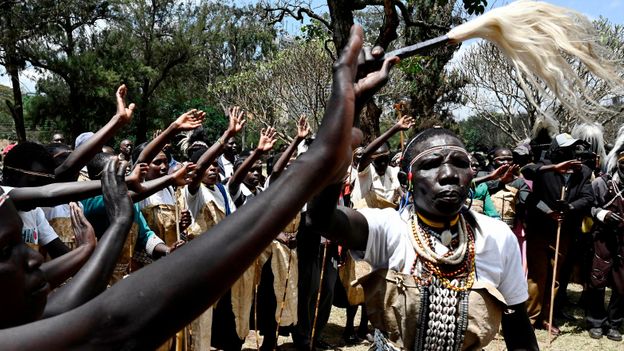
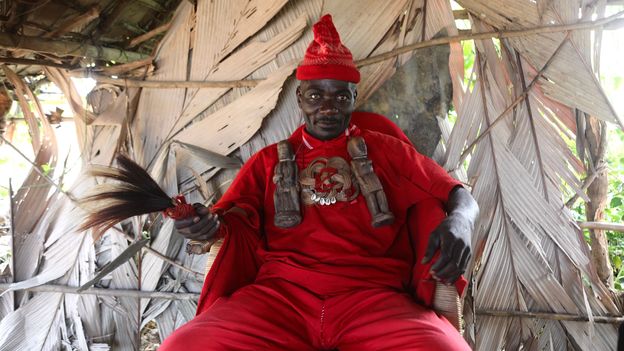
But in a country where ancestral land rights are recognised but not always respected, the government believes community forestry concessions will provide unprecedented new levels of protection. “This is the first time in history that indigenous peoples [in the DRC] will have official forest concessions,” says Mboyo.
At the same time, indigenous people are soon set to have their land rights legally recognised by the state – under the 1973 General Property Law, all land in the country belongs to the government. The bill, which was passed by the DR Congo’s National Assembly in November 2020 and is set to be given the green light by the country’s senate in March 2021, will not only confirm indigenous groups’ land rights, but also provide free education and healthcare.
“It’s important to say that this law is a great opportunity and the benefits of it will be integrated with the community forestry law,” says Patrick Saïdi, coordinator of the non-profit Dynamics of Indigenous Peoples Groups, who is based in DR Congo and has been campaigning for indigenous land rights since 2009.
It’s another reason for cautious optimism about this radical project transforming ownership of the DR Congo’s rainforests and the lives of the people that live in it. If the concessions are able to fulfill their potential, they could go a long way in protecting and preserving the second-largest rainforest in the world – and with it the future of the planet.
“Our lives are now even more connected with the forest than they were before,” says Wasa-Nziabo. “Our fates will be the same. That gives us great motivation.”
—
This story was reported with support by the Pulitzer Center.
—
The emissions from travel it took to report this story were 5kg CO2 travelling by motorbike, plus a round-trip journey of 300 miles by boat along the Congo River, for which no accurate emissions estimate is available. The digital emissions from this story are an estimated 1.2g to 3.6g CO2 per page view. Find out more about how we calculated this figure here.
—
Join one million Future fans by liking us on Facebook, or follow us on Twitter or Instagram.
If you liked this story, sign up for the weekly bbc.com features newsletter, called “The Essential List”. A handpicked selection of stories from BBC Future, Culture, Worklife, and Travel, delivered to your inbox every Friday.