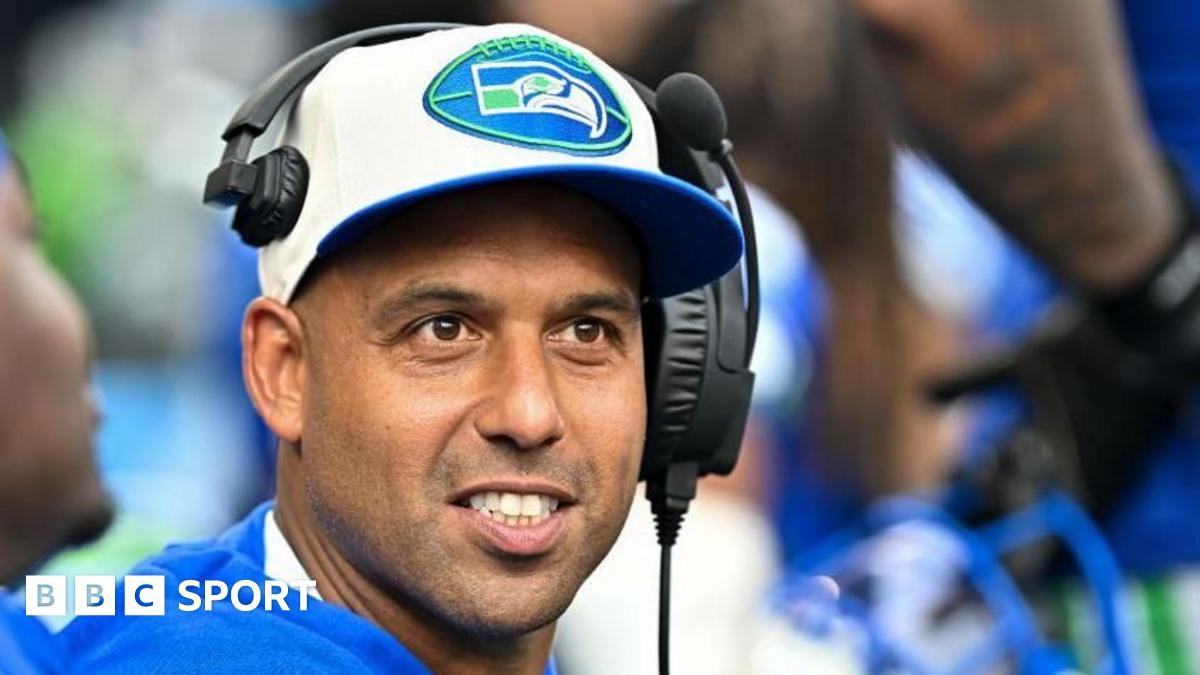


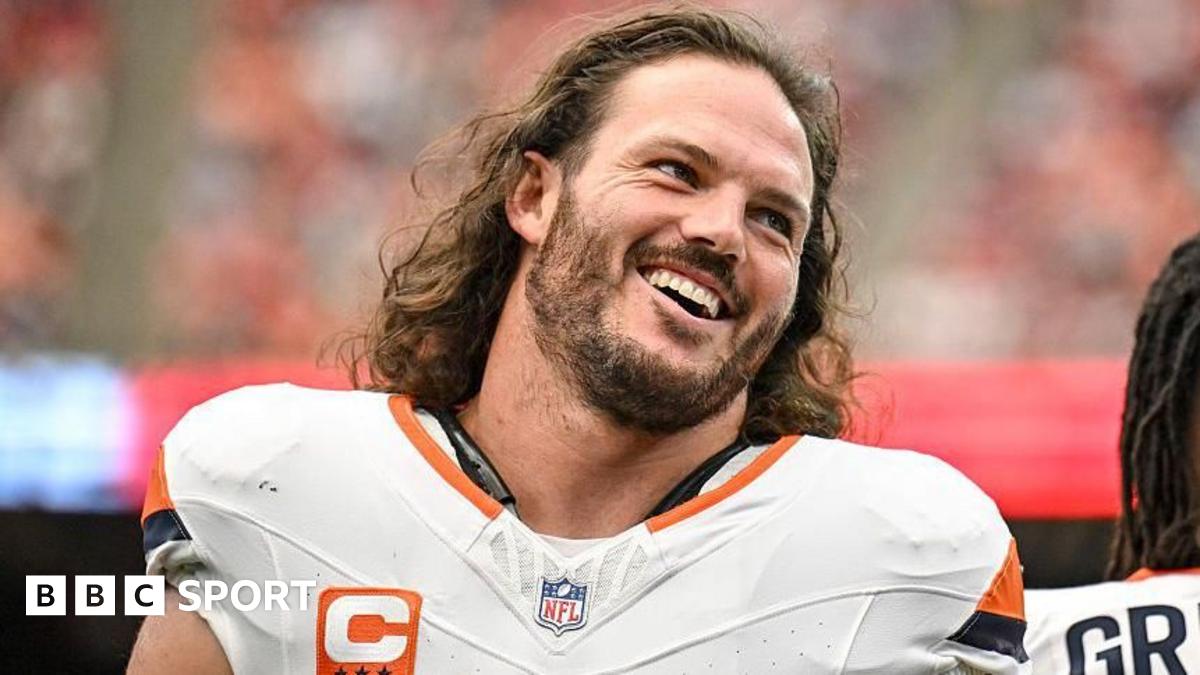
On 29 October, Singleton discovered a letter in his locker marked ‘confidential’. He ripped it open to read that a sample taken on 13 October – the day after Denver’s win over the New York Jets in London – returned an elevated level of the hormone hCG (human chorionic gonadotropin).
“I’m like, ‘whoa, that’s crazy’. I don’t know how that would happen,” he said. “I was walking into a meeting so just searched ‘hCG hormone’ and it pops up that you’re either injecting it or you have testicular cancer.
“I’m kind of freaking out. I go home, I tell my wife and was like, ‘well, I’m not taking anything’, so maybe I should go to a doctor’.”
Singleton’s wife Sam, who gave birth to their first child Tallyn in February, booked an appointment for Monday, 3 November.
So when Singleton helped Denver beat Houston the previous day, he still did not know whether he had cancer or faced a drugs ban, and “it was kind of in my head the entire time, wondering what was going on”.
After being diagnosed that Monday, Singleton said that “all I wanted to do was play Thursday night”.
“My biggest fear was getting this game taken away from me, not on my own terms,” he added. “I didn’t want Houston to be my last game because of what was going to happen to me after [the Raiders game]. You don’t know at that point.
“I came to the [team] facility, we talked it through and they were like, ‘as long as you’re in the head space to play, you can play. Let’s do this’.”