





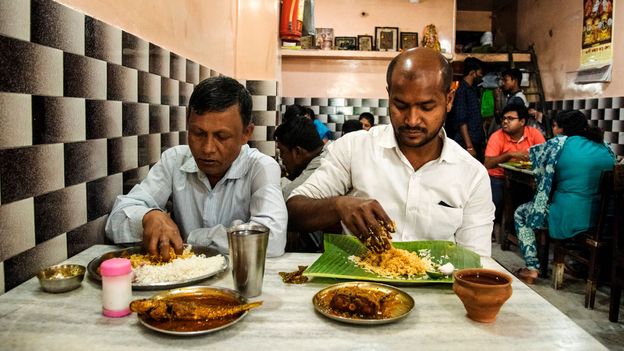
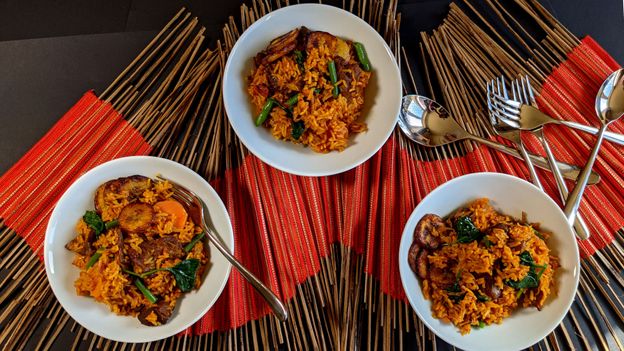
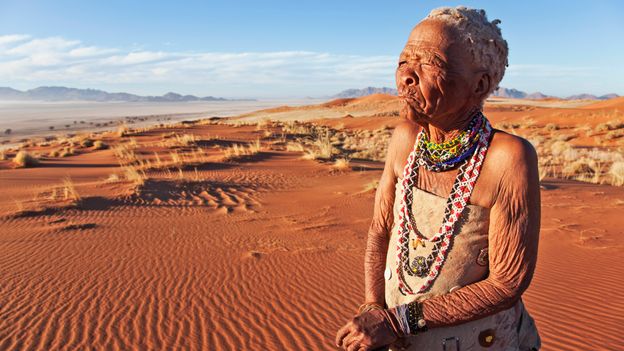
A year ago, I attended a fundraiser for a wedding in an affluent Nairobi neighbourhood called Lavington. As the sweltering midday heat hung in the air, a buzz of laughter and excitement echoed through the crowded tent. Many of the guests were newly graduated environmental activists and young entrepreneurs who openly carried wads of cash, eager to uplift the engaged couple in need. Just as I was getting lost in conversation, the master of ceremony tapped the microphone twice and asked, “Shall we begin this harambee?”
The word means ‘all pull together’ in Kiswahili, Kenya’s national language
A long-standing Kenyan tradition, a harambee is a type of self-help event that’s deeply ingrained in the moral compass of the country. The word means “all pull together” in Kiswahili, Kenya’s national language. It is the nation’s official motto; it appears on the country’s coat of arms; and it encompasses a concept of placing the group before the individual. For us Kenyans, a harambee represents an unwritten law of generosity, and regardless of class, ethnic group, gender or religious background, we will lend a hand to assist anyone in need.
Broadly speaking, a harambee can be anything from a fundraising event to emotional support to a simple favour. Whenever an individual is facing a significant rite of passage or life event – such as a wedding, educational opportunity, serious illness or a relative’s funeral – and needs help, they will contact an elder family member or tribal leader. This leader will then call a meeting with other elders, and if the issue is deemed significant enough to warrant the strength of the community, they will share the issue with the individual’s family, friends and co-workers and organise a harambee. Those in attendance often contribute money, services or emotional and physical support, and expect nothing in return.
According to historian Njuguna Ng’ethe at the University of Nairobi, the idea of harambee originated when Swahili porters needed to band together to lift something heavy. Whenever one person would shout “Harambee!”, the porters would lift the object together at the same time. Yet, according to Kenyan folklore, harambee was born when some 30,000 Indian migrants arrived in Mombasa in the 1890s to help build the Kenya-Uganda railway at the behest of the British. As they worked alongside Kenyans, the Indians called on Hare, the divine potency of God, and Ambe, the goddess of power, energy and invincibility. The Kenyan workers often joined in, and soon, this combined Indian chant of “Hare” and “Ambe” became a uniquely Kenyan rallying call of unification.
Harambee was more than a motto, it symbolised Kenyan unity, patriotism and, most importantly, the future
The term gained national prominence in May 1963 when Kenya’s first president, Jomo Kenyatta, evoked the concept during his election day victory speech. Kenya had just gained independence from British rule and Kenyans were eager to pull the country together, build a new, post-colonial nation and embark on a journey towards self-determination.
“I would suggest we use the Kiswahili word ‘harambee’ to express the mood we want to create,” Kenyatta said to a sea of cheering supporters. “It means ‘let us all work together’. Get up and go!”
The idea of harambee was nothing new. According to Patrick Moseti, a lecturer of world history and civilisation at Strathmore University in Nairobi, many pre-colonial African societies were governed by philosophies that ensured societal harmony and cohesion. Everything was shared and everyone safeguarded the wellbeing of the greater good; parenting, disciplinary action and food were communal.
Kenya’s early leaders had to address serious national problems, including poverty, disease, low literacy levels and lack of infrastructure. Moseti believes harambee was key in the early stages of the country’s development. “Harambee mobilised Kenyans,” he said. “They used it to solve their shared problems by pulling together through action.”
Harambee was more than a motto, it symbolised Kenyan unity, patriotism and, most importantly, the future. Kenya’s second president, Daniel Arap Moi, frequently evoked harambee during his presidency from 1978-2002 to rally the masses and push many ambitious government-wide initiatives, such as building schools, providing all school children with free milk, planting trees to reverse deforestation and constructing gabions to stop soil erosion.
Harambee didn’t just transform Kenya, it changed the world
A popular song during Moi’s rule inspired a sense of nationalism: “Harambee Harambee… tujenge serekali… Wananchi Harambee, tuvute pamoja” (“All pull together, All pull together… let’s build the government… Citizens, all pull together, let’s pull together”). And, according to a 1988 study by AV Noreh at the University of Nairobi, harambee self-help and fundraising events that were spread through word of mouth and local newspapers – and propped up with government start-up funds – helped to mobilise more than US$55m between 1963 and 1988. “This figure shows how crucial and instrumental the movement is in improving the lives of Kenyans,” Noreh wrote.
“Kenyatta started [harambee], Moi perfected it,” said Wanjeri Nderu, an activist and human rights defender based in Nairobi.
Harambee didn’t just transform Kenya, it changed the world. As Kenya was on the cusp of independence, its Minister of Economic Planning and Development, Tom Mboya, wanted more members of its new government to be adequately prepared for post-colonial rule. So from 1959 to 1963, he worked alongside US president John F Kennedy and civil rights activist Martin Luther King Jr to transport the spirit of a harambee abroad, creating the Kennedy Airlift Program: a series of educational scholarships for Kenya’s brightest minds at American colleges. The idea was for the recipients to return to Kenya to help propel the future of the nation and give back to all Kenyans. The most memorable beneficiaries include Nobel Peace Prize recipient and social and environmental activist Wangari Maathai, and senior governmental economist Barack Obama Sr, the father of president Barack Obama. Without the spirit of harambee taking Obama from the Kenyan village of Kogelo to the University of Hawaii, the US would not have had its first black president.
You may also be interested in:
• The most inviting city in Africa
• How boredom can inspire adventure
• An ancient island at the centre of the world
Yet, what started as an altruistic way to unify the nation has often bred corruption, with government officials sometimes soliciting donations for their own means and trying to evoke harambee to enact public programmes paid by private donations.“[Harambee] removed the responsibilities of the government from taking care of the public. They rallied various communities around development projects to work for free,” said Nderu. “The idea was misused by our presidents and leaders. Previous regimes insisted that harambees were a sign of patriotism, that was the problem.”
As a result, a bill passed in 2003 making it illegal for public officials to use their offices to solicit or conduct harambees, signalling a new dawn for Kenya’s national motto.
Today, one of the most common examples of harambee in action is through groups called chamas, cooperative societies that pool savings and investments. These collectives are often formed by family members, friends or co-workers and are used to do everything from paying for large social gatherings to forming new businesses to investing in land. It is estimated that more than 65% of Kenyans participate in at least three of the country’s estimated 300,000 to one million chamas, and these micro-savings groups have a total net worth of 368 trillion Kenyan shillings (£2.64bn) in assets.
“People come together to raise funds; it is known as mchango (contribution). We witness it in the most important parts of life such as education, health and conserving the environment,” explained Abdikadir Kurewa, a Chief Cultural Officer at the State Department of Culture and Heritage.
Kurewa speaks from experience. He’s a member of the Rendille community, a pastoralist tribe in northern Kenya, and in order to pay for his undergraduate degree, his tribesmen pooled their money to send him to Catholic University of Eastern Africa in Nairobi.
Chamas have helped propel Kenya to boast the largest economy in East Africa, which in turn has lured foreign businesses and expats and made it one of the more expensive African countries to visit. Interestingly, harambee has also led Kenya to boast another distinction visitors may find more appealing: East Africa’s fastest internet. In the decades after President Moi built thousands of schools, Kenya invested in high-speed internet to further its mission of lifting the country up by improving the education of its citizens.
Harambees have historically been conducted through in-person events, but since Covid-19, these fundraisers have been moved online. For example, a Facebook group called Buyer Beware whose members helps support humanitarian causes, recently crowdfunded a campaign called #supportahrd to feed frontline workers stationed in low-income areas during the pandemic.
We Kenyans are a giving people and generosity isn’t just at the core of our hearts but a patriotic pact we have with our nation. “Service be our earnest endeavour” is a pledge promised in our national anthem, and it’s delivered through harambee. Nearly 60 years after the nation’s independence, harambee is an idea so inviting that it continues to flourish in the hearts and minds of all Kenyans.
Why We Are What We Are is a BBC Travel series examining the characteristics of a country and investigating whether they are true.
Join more than three million BBC Travel fans by liking us on Facebook, or follow us on Twitter and Instagram.
If you liked this story, sign up for the weekly bbc.com features newsletter called “The Essential List”. A handpicked selection of stories from BBC Future, Culture, Worklife and Travel, delivered to your inbox every Friday.