Worklife
  • Login
  • Home
  • News
  • Sport
  • Reel
  • Worklife
  • Travel
  • Future
  • Culture
  • More
    • Music
Wednesday, December 10, 2025

WORKLIFE

  • Home
  • About Us
  • Remote Control
  • Collective Intelligence
  • Beyond the 9-to-5
  • Worklife 101
  • More
    • Psychology
    • Productivity
    • Technology
    • Japan
    • Time Hackers
No Result
View All Result
WORKLIFE
No Result
View All Result
Home Japan

The future of Japan’s master artisans

May 17, 2020
in Japan
2 min read
287 22
0
1.2k
VIEWS
Share on FacebookShare on Twitter


Balancing art and reality

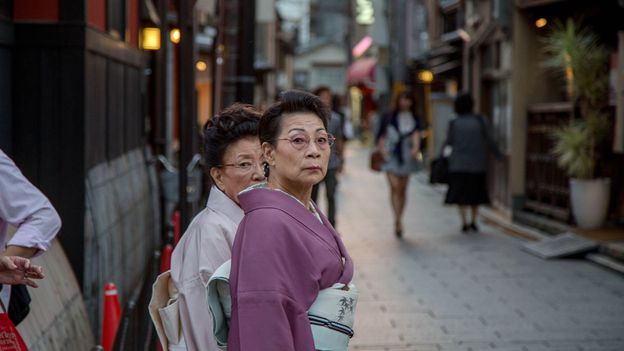
Yet not every repetitive, intricate task can be automated. And, as Takeshi Tashiro of PIIE says, “traditional craftsmanship has still huge economic value”, pointing to Japan’s recent record-breaking tourism, in which sipping handmade green tea or trying on kimono are huge draws. Whether it’s consumables or cars, Japan continues to have a reputation for keen attention to detail that attracts global interest. It could be that for the shokunin ethos to continue to thrive, the products themselves may have to change. The trick might be to marry shokunin craft with products – like specialty coffee and good shoe-shining – that are more in demand.

Nagasawa points to collaborations between global luxury brands and old Japanese businesses that give traditional goods a modern twist as one solution. For example, in 2017, Hermes partnered with Karacho, a Kyoto-based hand-printing studio founded in 1624, to make bound, handheld notebooks with vibrant patterns. Back in 2007, Louis Vuitton teamed with artisans in Ishikawa prefecture to make limited-edition lacquer accessory cases, while Gucci and Tiffany have also collaborated with Japanese artisans.

Tashiro also believes that shokunin-style attention to detail can be leveraged to boost Japan’s soft power. “Many anime and video games are inspired by such craftsmanship, and vice versa,” he says. Last November, Mataro, a century-old company in Tokyo that makes traditional Japanese dolls, released a gorgeously intricate stuffed Pikachu to celebrate the launch of the latest Pokémon game. Efforts like these could help safeguard shokunin in the future.

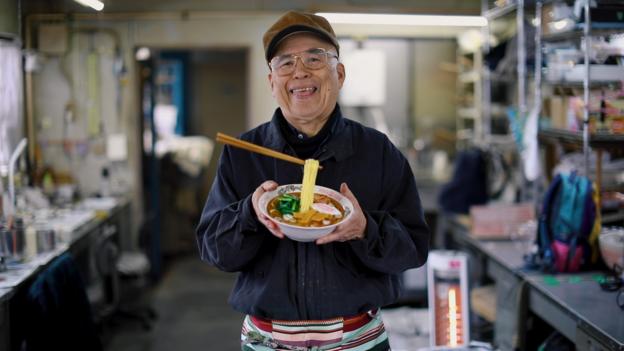
For Hasegawa, survival may mean balancing art with financial realities, so he can sustain his community of shoe-shining shokunin. “If I’m just a shokunin, I can’t expand the business. I didn’t see many shoe shiners – I saw elderly people doing it, and they quit,” he says. But now a big part of what he does is teach his apprentices his talent so they can carry the torch.

“They’re young and hip and cool. I want to bring shoe-shining to the fashion world,” he says. “I wanted to bring shoe-shining to another stage.”

Additional reporting by Yoko Ishitani.


Source link

Related articles

The Japanese city that banned ‘smartphone-walking’

The virtual vloggers taking over YouTube

Tags: artisansfutureJapansmaster
admin

admin

Related Posts

The Japanese city that banned ‘smartphone-walking’

by admin
August 25, 2020
0

The successful future of Yamato’s non-punishable anti-smartphone law depends largely on social interpretation. Suzuki attributes what he calls “a 1.5 criteria” to whether a law...

The virtual vloggers taking over YouTube

by admin
August 22, 2020
0

How we’ll accept digital influencersSo what’s the appeal?YouTube’s Allocca credits communities that build around them. We see these around VTubers, who often hold live chats...

More seniors, more foreigners: How Japan is changing

by admin
June 12, 2020
0

 Goto of the Woodrow Wilson Center says there is a stringent code for what it means to be Japanese. “It’s not simply about citizenship: it’s...

White Day: Japan’s reverse Valentine’s Day

by admin
June 2, 2020
0

Hidaka says that it was designed to give women the chance to show their feelings. “In a macho, male-dominated era, I guess that made sense,”...

The art of perseverance: How gaman defined Japan

by admin
May 29, 2020
0

But today the lifetime employment system is breaking down, people are marrying later, more women are working and the birthrate is at its lowest level...

Next Post

How Japan could reinvent the hotel

How the Japanese are putting an end to extreme work weeks

Five tips to look your best on video calls

Leave a Reply Cancel reply

Your email address will not be published. Required fields are marked *

CATEGORIES

  • About us
  • Beyond the 9-to-5
  • Collective Intelligence
  • Japan
  • Productivity
  • Psychology
  • Remote Control
  • Technology
  • Time Hackers
  • Worklife 101

RECOMMENDED

Remote Control

Is there an antidote to ‘digital intensity’?

June 2, 2021
Japan

Why overtired Japan is turning to office siestas

May 21, 2020

TAGS

avoid bad BBC Biometric calls changing Collective Control Coronavirus CVs decisions digital elite home Intelligence Japan Japans job lockdown mindset news office pandemic people procrastination Productivity Remote rise selfcontrol space stop success team tech time tips uncertainty video Virtual work workers working Worklife world Zoom
Worklife

© 2020 JBC Reel - Powered byJOOJ.us.

Explore the JBC

  • Home
  • News
  • Sport
  • Reel
  • Worklife
  • Travel
  • Future
  • Culture
  • More

Follow Us

  • About us
  • Beyond the 9-to-5
  • Collective Intelligence
  • Japan
  • Productivity
  • Psychology
  • Remote Control
  • Technology
  • Time Hackers
  • Worklife
  • Worklife 101

© 2020 JBC Reel - Powered byJOOJ.us.

Welcome Back!

Login to your account below

Forgotten Password?

Create New Account!

Fill the forms bellow to register

All fields are required. Log In

Retrieve your password

Please enter your username or email address to reset your password.

Log In
Worklife
More Sites

    MORE

  • Home
  • News
  • Sport
  • Reel
  • Worklife
  • Travel
  • Future
  • Culture
  • More
    • Music
  • Worklife

    Worklife JBC